Lex Machina is a legal analytics platform with a new Generative AI interface called Protégé that reveals litigation insights through simple prompts, informing your arguments and case strategy to drive better outcomes. Read our new TechnoLawyer Buyer's Guide report below.
The Killer Feature
For years, Lex Machina has helped litigators analyze judges, opposing counsel, motion outcomes, case durations, and more. It transforms raw court data into actionable legal insights.
Accessing this treasure trove of data has traditionally required navigating Lex Machina's advanced filters and analytics tools. These filters still exist, but you can now obtain the information you need faster with Protégé — the new Generative AI interface integrated into Lex Machina.
Protégé supports natural language queries so you can simply ask for information and pose questions. It instantly interprets your prompt, applies the right filters, and returns precise, relevant data.
For example, you could ask, "How often are attorney fee awards granted to plaintiffs in patent cases?" Protégé generates a tailored table within Lex Machina, which you can refine further using traditional tools or simply re-ask the question with the additional details you need.
Other Notable Features
Unlike traditional court dockets, Lex Machina knows what transpired in every case thanks to its proprietary artificial intelligence and team of data scientists who oversee data collection and processing. This enables you to understand who won and how, the damages, and whether the judgment withstood appeal.
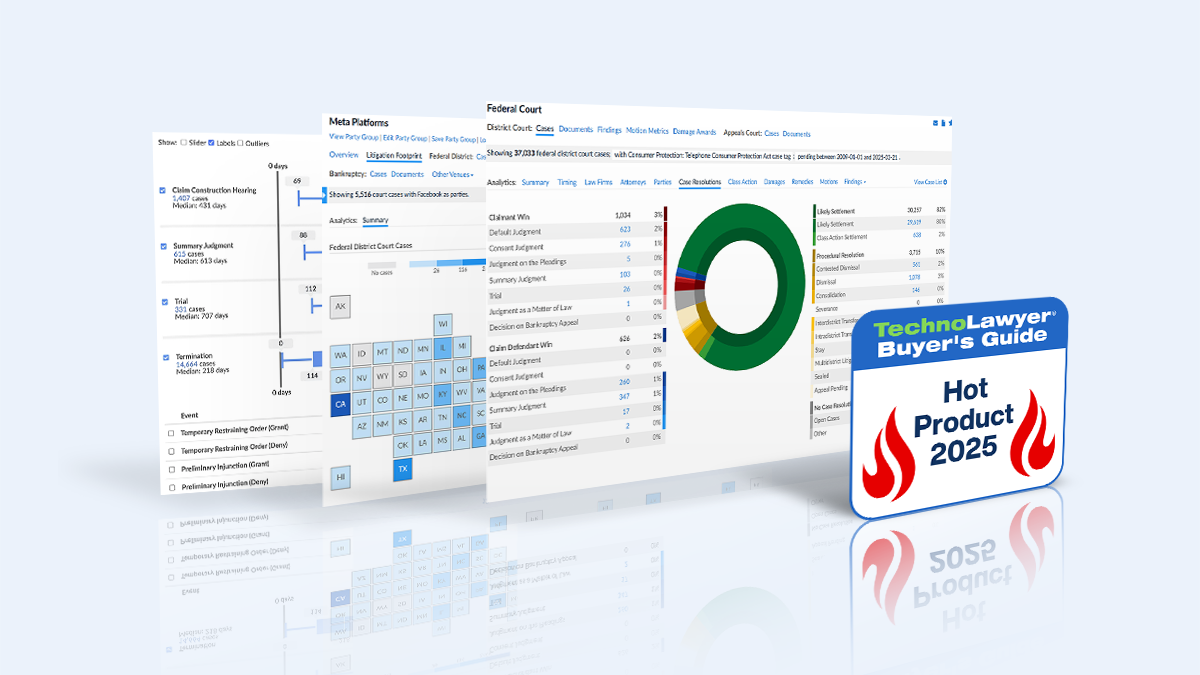
The new Litigation Footprint visual demonstrates the depth of Lex Machina. It lets you view the entire litigation history of a party to identify relationships, trends, and more.
Other popular visuals include state court motion metrics, class action analytics, judgments on specific legal issues, the success of appeals, and the timing to key case milestones such as summary judgment. And of course, a core function of Lex Machina entails understanding how your judge and opposing counsel have behaved in similar cases.
Lex Machina offers an API that your firm can use to create applications that tap into its data. For example, you can receive alerts on any data Lex Machina tracks.
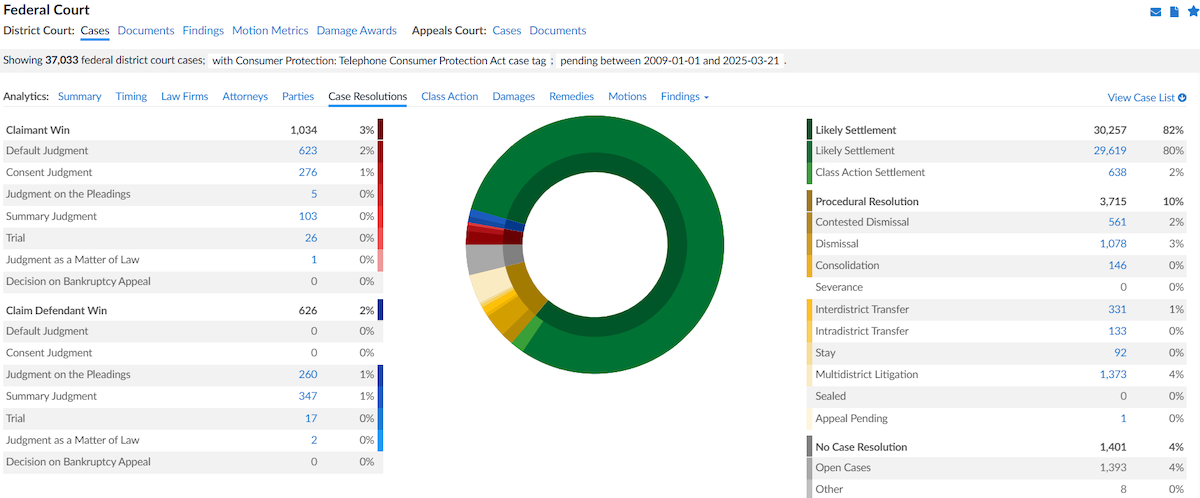
Using Protégé in Lex Machina enables you to find relevant insights about cases similar to yours (such as the breakdown of case outcomes shown here) by asking questions.
Meet Neil J. Squillante
Neil J. Squillante founded TopLaw and serves as its publisher. As a young litigator working on a high-profile trial, Neil witnessed the discrepancy between what happened in the courtroom and what the media reported. Neil created TopLaw to provide fellow lawyers and law firm personnel with reliable information. Many consider TopLaw newsletters the only ones they need. Previously, Neil practiced commercial litigation at Am Law 100 firm Willkie Farr & Gallagher. He received his J.D. from UCLA School of Law and his B.A. from Duke University. At UCLA, Neil served as a Managing Editor of UCLA Law Review.